
Roses in Pots: Pure Romance on Your Balcony or Terrace
A practical guide for rose enthusiasts
Who says you need a large garden to enjoy roses? As a rose lover, I can assure you: even on a small balcony, terrace, or patio, roses can truly shine. Potted roses combine charm, fragrance, and colour in a compact and flexible way. They bring not only atmosphere, but also a touch of magic right to your door, at eye level, and often within arm’s reach.
We use potted roses on our own terrace to show visitors at the nursery just how versatile a rose can be, even outside of traditional borders. By now, several pots are on display, each with its own unique character.
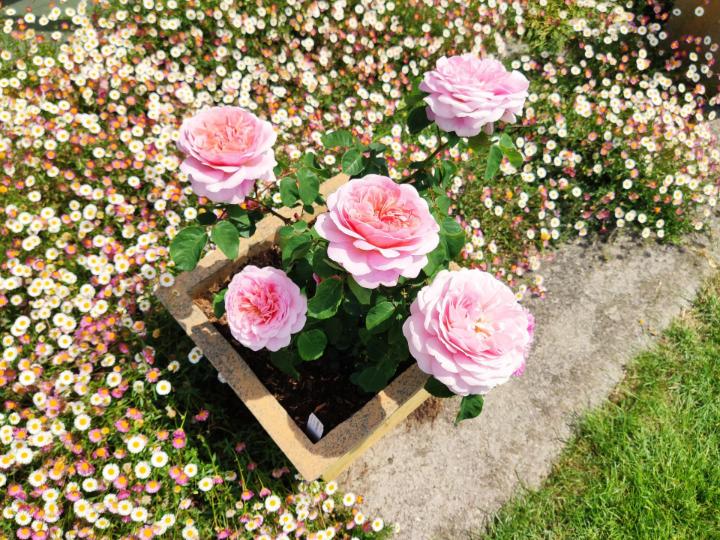 Above, the rose 'Eustacia Vye' is combined with Mexican fleabane ( Erigeron karvinskianus).
1. Choosing the Right Rose for Growing in a Pot
Not every rose feels at home in a container, but fortunately, there’s plenty of choice.
Miniature rosesmany floribundas, and compact shrub roses are particularly well-suited. They remain manageable in size, bloom abundantly, and don’t require deep root space. Think of a fresh pink like ‘The Fairy’, a compact miniature like ‘Pascaline’, or the ever-reliable 'Ma Fille Sara' , which instantly brings a smile to your face.
Looking for a touch of elegance? A standard rose in a pot adds vertical interest and a graceful accent. Beautiful when combined with low-growing ground covers or bedding plants at the base.
Climbing roses are a bit more challenging, but if you choose compact climbers and treat them to a generously sized pot or container, they can thrive. Good options include 'Henrianne de Gerlache', 'Rambling Rosie', 'Strawberry Hill', 'Multiflore de Vaumarcus' or 'Little Rambler' .
When choosing, consider:
- Fragrance: A strongly scented rose like ‘Caroline's Heart’ turns your seating area into a fragrant oasis.
- Blooming period: Prefer repeat-flowering varieties for long-lasting enjoyment throughout the season.
- Colour: Don’t be afraid to mix and match. Classic red ('Bordeaux') next to warm orange ('Super Trouper') or romantic pastels with lilac accents ('Bonica', 'The Faun' or
'Pinocchio'), everything is possible.
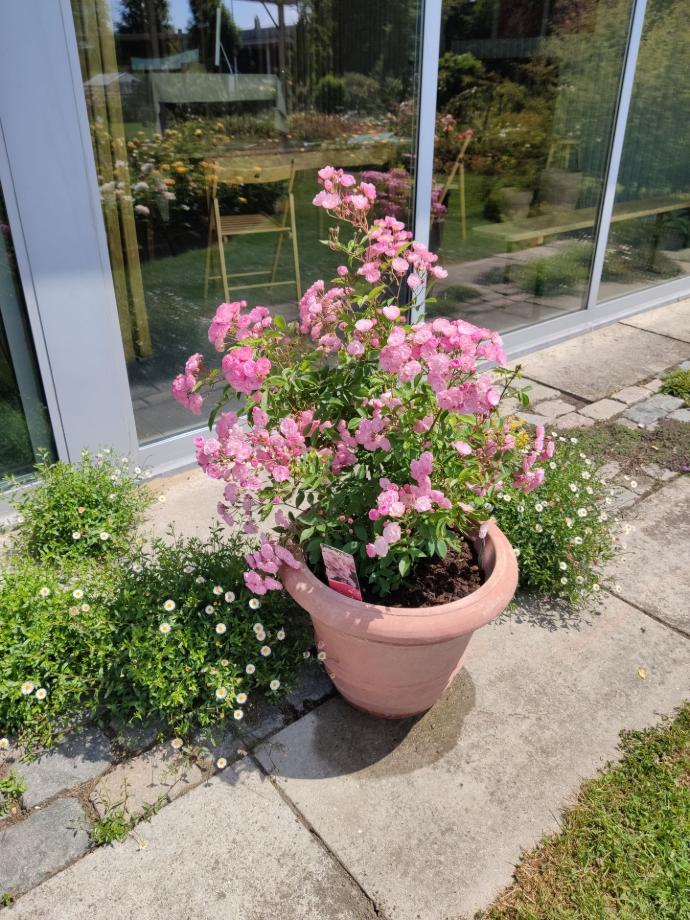
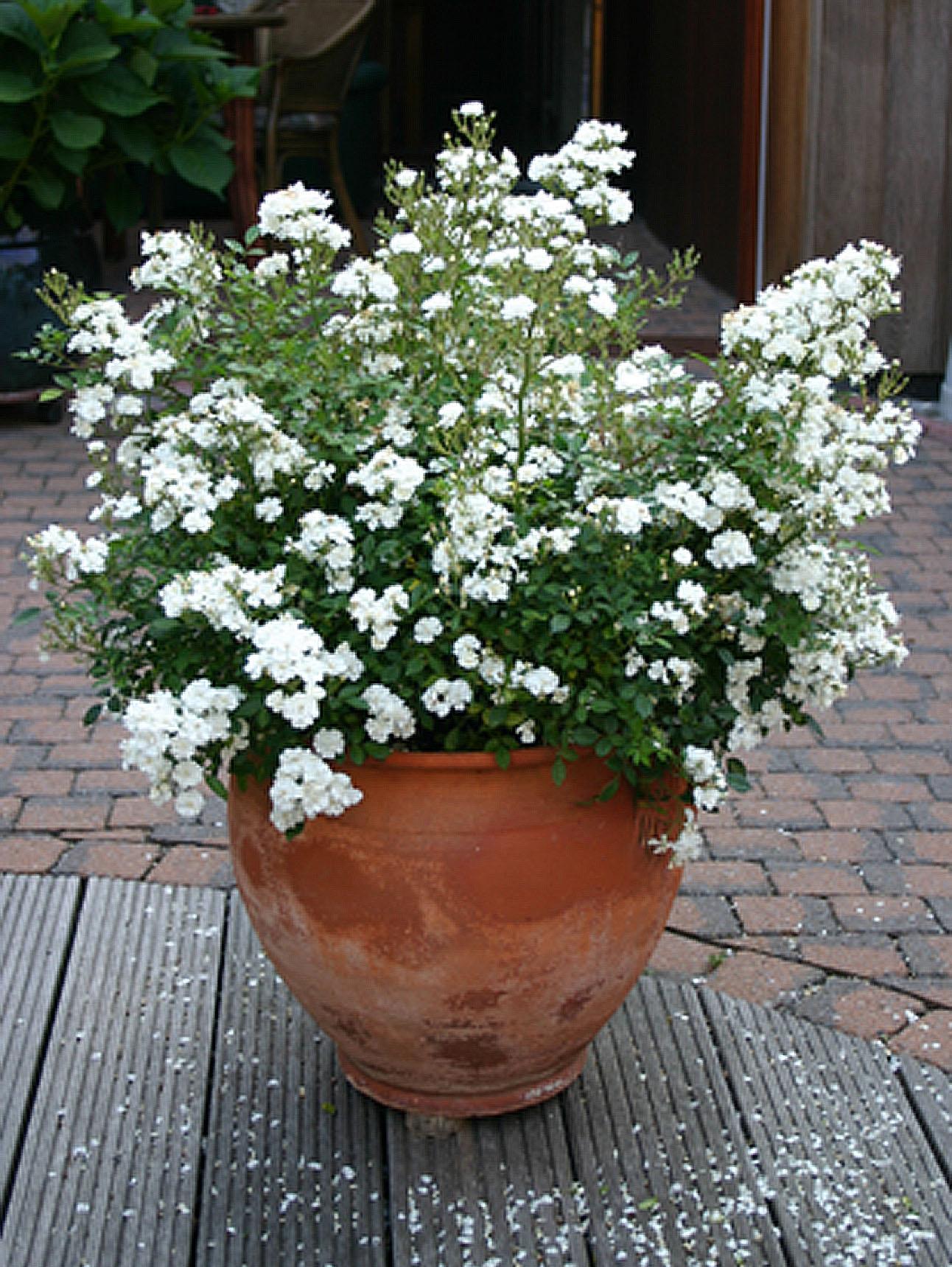
Below you see 'Heavenly Pink' (pink) and 'Popcorn' (white).
2. Choosing the Right Pot
A good pot is more than just a pretty container.
When it comes to roses in pots, size does matter. Ideally, choose a pot with at least a 40 cm diameter or a capacity of 30 litres. Bigger is always better. Roses need deep roots to develop well.
As for materials:
- Clay or terracotta breathes well but make sure to use frost-resistant types.
- Plastic is lightweight, easy to move, and retains moisture longer.
- Wood has a warm look and offers good insulation, especially when combined with an inner pot.
Whatever material you choose, ensure the pot has sufficient drainage holes. Roses don’t like “wet feet.”
3. Potting Soil and Feeding
Roses are hungry plants, so provide them with a rich, airy growing medium. Preferably use:
- A high-quality rose potting mix (possibly blended with 10–20% compost and some bentonite).
- Add some slow-release fertilizer at the time of planting.
- During the growing season (April through August), apply additional fertilizer to stimulate blooming. Feed once in June, July, and August.
Note: Never fertilize during the dormancy period (after August until early February). Your rose needs a break during that time.
4. Placement and Watering
Roses are sun lovers: they need at least 4 hours of sunlight a day. A south-facing spot is ideal, as long as there’s some air circulation to help the plant dry quickly after rain.
Protect potted roses from harsh wind, an enclosed corner of a balcony or against a warm wall works well.
Watering needs careful attention, as pots dry out faster than open ground.
- Check daily during warm periods.
- Water generously, preferably early in the morning.
- Too wet? You’ll get yellowing leaves and root rot.
- Too dry? The leaves will fade, dry out, and flowering will suffer.
A tip from the grower: stick your finger into the soil. If it feels dry, it’s time to water.
The plant below will recover—but it’s best to avoid that kind of water stress too often.
5. Care and Maintenance
Roses thrive in pots, provided you respect their specific needs. With the right care, they can remain healthy, bloom abundantly, and continue to surprise you year after year. They do require slightly more attention than roses planted in the ground, mainly because of the limited space in a container. Below, we share our most important tips—from pruning to winter protection, including a rejuvenation method that truly makes a difference.
Annual Pruning and Care
- Spring pruning (early March): Cut your potted rose back to strong, healthy buds, just as you would with garden roses. This stimulates vigorous new shoots and encourages compact, fresh growth.
- Deadheading: Regularly remove spent blooms to prevent the plant from putting energy into seed production. This encourages faster and more prolonged repeat blooming.
- Tying up long shoots: If necessary, gently tie up long canes to a support.
Rejuvenation: Repotting for Long-Term Vitality
Over time, potted roses face space and nutrient limitations. That’s why we recommend a simple but highly effective rejuvenation technique:
- When? At the end of winter (February to early March), just before growth resumes.
- How? Carefully remove the plant from the pot. Loosen the root ball slightly and prune away any old or dead roots. Replant in fresh, nutrient-rich potting soil, preferably light and enriched with compost.
- Fertilizing: From March onward, you can apply a first dose of rose fertilizer to kickstart growth. Repeat monthly if needed until August.
Repotting Frequency:
Pots < 30 litres: every 2 years
Pots > 40–60 litres: every 4 to 5 years
No time to repot completely? In spring, simply replace the top 5 cm of potting soil with fresh soil mixed with fertilizer. This small refresh can already make a big difference.
Winter Protection
Potted roses are more vulnerable to frost since their roots are less insulated than those in the ground. A few simple steps can prevent major damage:
- Place the pot on a piece of wood or stand to avoid contact with frozen ground.
- In extreme cold: move the pot temporarily to a sheltered area like a veranda, garage, or garden shed (only for short periods during severe frost)
- Wrap the pot in burlap or bubble wrap during prolonged freezing weather. This is rarely needed but can help protect terrace pots that are constantly exposed to wind and cold.
Water and Nutrition
Water your potted roses regularly, especially during warm periods. The soil should never fully dry out, but avoid waterlogged conditions.
Make sure the drainage hole at the bottom remains clear. Consider placing the pot on feet to prevent blockage.
Use a slow-release fertilizer specifically formulated for roses.
Recommended type: NPK(Mg) 6-6-9(+3) enriched with humic and fulvic acids.
6. Avoiding Common Mistakes
I made plenty of mistakes when I started, but those are the ones you learn from the fastest. The most common pitfalls include:
- A pot that’s too small: the rose becomes stunted.
- Poor drainage: water builds up, causing root rot.
- Irregular watering: the plant becomes stressed—and you’ll see the signs.
Also watch out for aphids or spider mites: inspect regularly and, if needed, intervene with natural remedies.
In Conclusion
Potted roses are a true feast for the eyes. They let you garden on a small scale—but with grand results. And believe me, nothing beats seeing your first rose of the season bloom right where you sip your coffee or read a book.
Dare to experiment, choose a rose that suits you, and enjoy the journey!