
Do you sometimes look at your rose bush with mixed feelings in July? The first flush is over, some flowers are still beautiful, but others are drooping and wilted. You wonder: should I cut them off now? Or should I just let nature take its course?
In this blog, you'll discover why it's worthwhile to remove faded flowers (deadheading), how to do it properly, and what it means for your plant. A simple action that works wonders for both the appearance and repeat blooming of your rose.
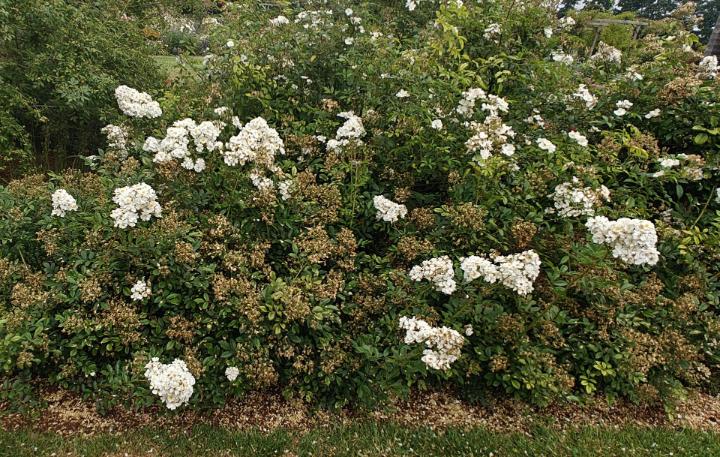 Above, the rose 'Flash'. A profusely flowering shrub that is also popular with floral designers thanks to its pea-shaped hips.
1. Why remove faded flowers?
Roses bloom in order to reproduce. Once a flower has been pollinated, the plant’s energy shifts toward developing fruit (rose hips). However, if you remove the faded flowers in time, you send a different signal. It’s as if you’re saying, “You’re not done yet—bloom again.”
Deadheading results in:
- More repeat flowering, often into autumn
- Less energy lost to fruit formation
- A neater, fresher appearance for your plant
2. How do you do it correctly?
To encourage your rose to bloom again, it’s often enough to gently remove the spent flower by hand. This works especially well with cluster roses (like 'Märchenzauber'), where not all blooms fade at the same time—a quick and simple way to refresh the plant.
Just pinch off the withered flower between your thumb and forefinger—it’s easy to do during an evening stroll through the garden. This way, you leave the open blooms untouched while guiding the plant’s energy toward new growth.
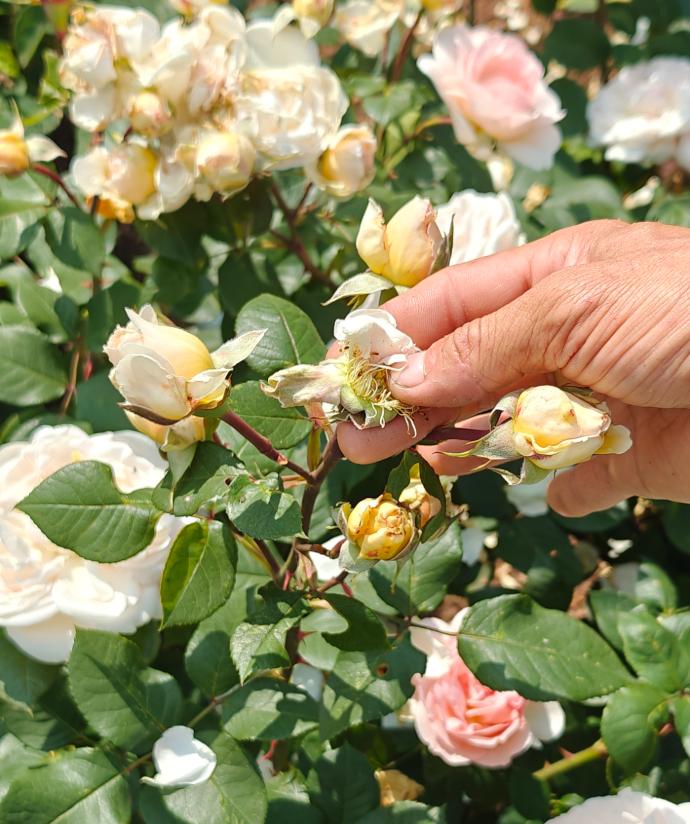
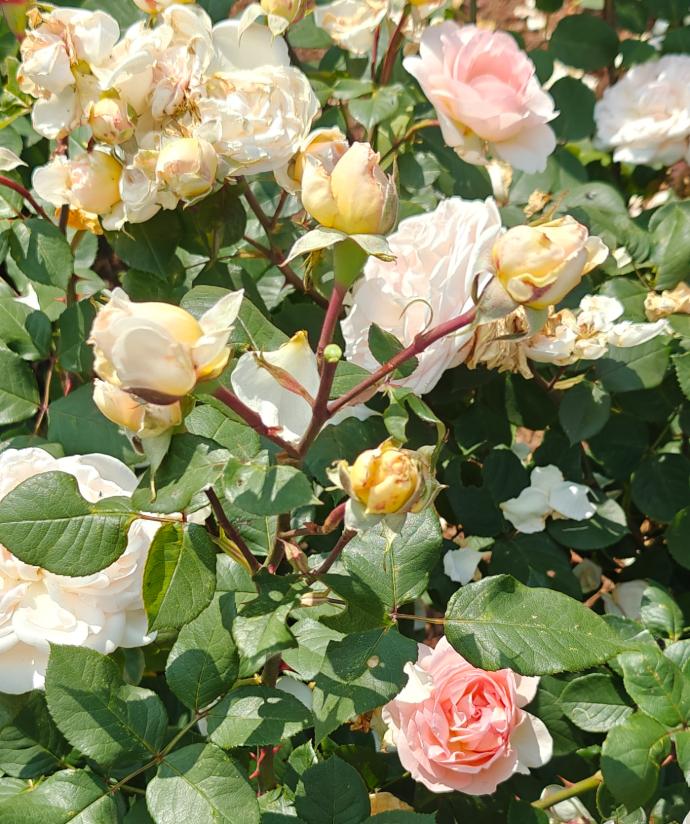
However, if you’d like to keep the entire shrub in a more balanced shape—or if you want to stimulate even stronger repeat blooming—we recommend pruning a bit more deeply.
In that case, use a sharp pair of secateurs and cut back the faded flowers to just above a well-developed leaf, where you’ll often see a small bud already forming in the leaf axil.
A few tips:
- Cut at an angle to prevent water from sitting on the cut surface
- Avoid damaging young shoots or buds just below
- Always prune in dry weather
This gives your rose the opportunity to produce strong new shoots with fresh flower buds, while keeping the plant healthy and well-shaped.
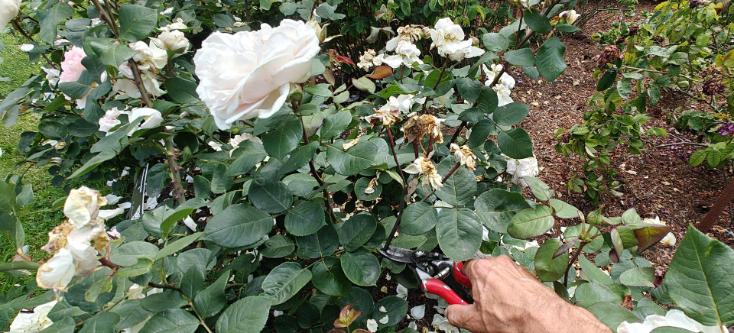
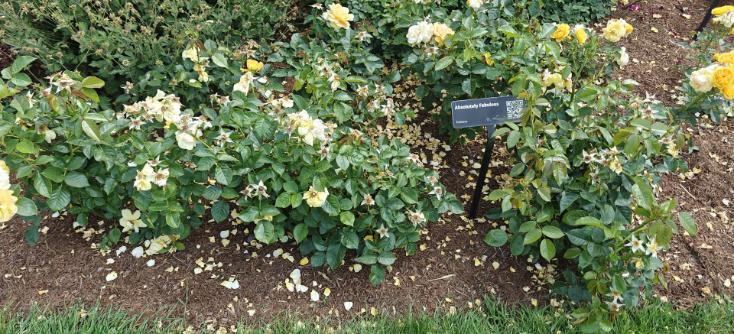
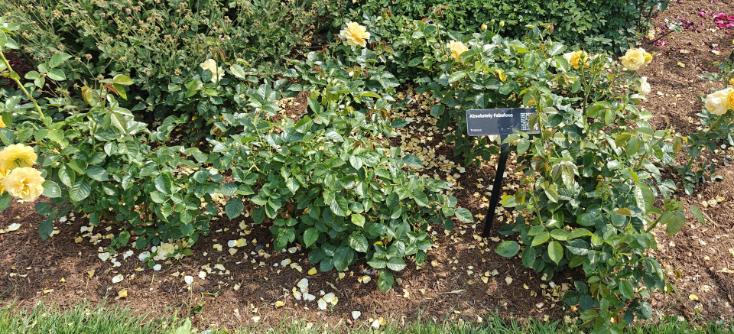
In the first photo below, you can see how the rose ‘Absolutely Fabulous’ looks just after its initial bloom: faded beauty, with just a few flowers still hanging on. In the second photo, you see the same plant immediately after a quick tidy-up—the faded flowers have been carefully removed.
The difference is immediately noticeable: the plant appears neat again, ready to form new buds. Such a simple action (taking only a few minutes) prompts the rose into a new blooming cycle, often within just a few weeks.
3. When and how often?
You can continuously remove spent flowers throughout the flowering season. Some gardeners even incorporate this into their weekly garden stroll. Of course, this only makes sense with repeat-flowering roses.
A few tips:
- You don’t need to wait until the flower is completely wilted.
- After heavy rain or strong winds, you can also remove damaged flowers.
- Towards the end of summer, it’s generally best to leave the plant alone, especially if it produces decorative hips. These fruits can add ornamental value or provide food for birds.
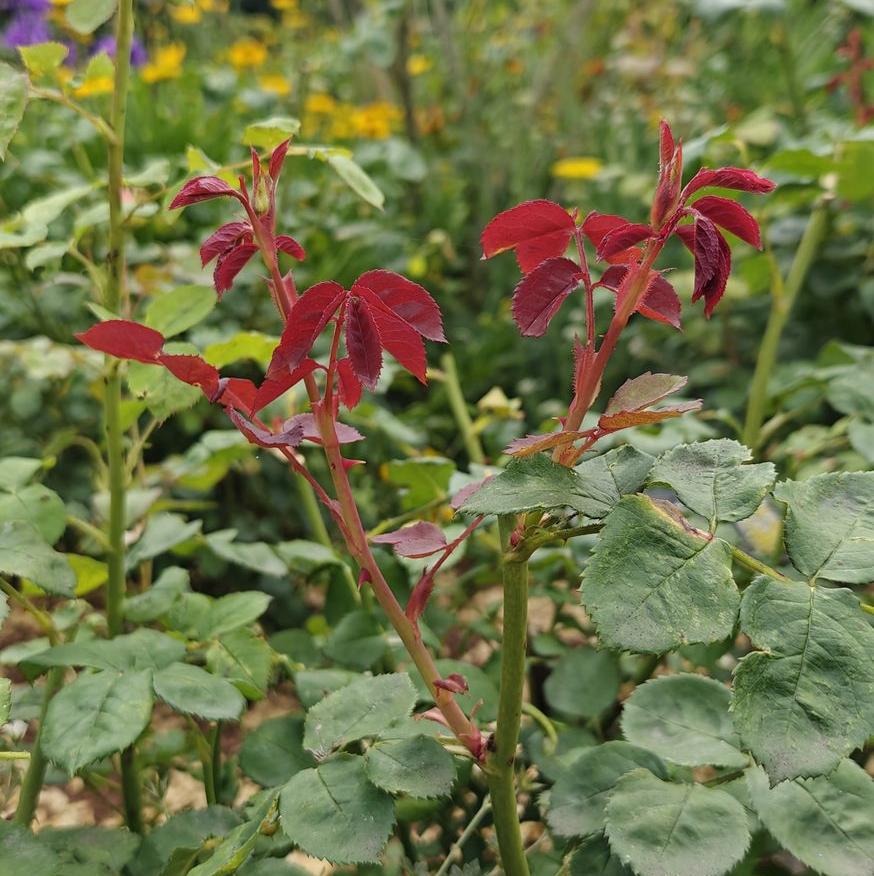
'Caroline's Heart' produces vigorous new growth after its early flowering.
The attractive red shoots turn green as they mature.
4. Combining blooms and hips? Absolutely!
Some roses produce beautiful hips after flowering (think colors ranging from yellow and orange-red to glossy black). The most attractive hips typically form from the first flush of flowers, as these fruits have the longest time to mature and develop their vibrant colors.
During later bloom cycles, hips tend to be smaller and less vividly colored.
Want the best of both worlds? Prune selectively. Leave some of the first flowers untouched for hip formation, and remove others to stimulate repeat blooming. By doing so, you can enjoy both flowers and hips simultaneously on the same plant by September.
This approach is ideal for hybrid musks like:
- ‘Mozart’
- ‘Millie Fleur’
- ‘Matchball’
- ‘Grand-Duc Jean’
- 'Musquée Sans Soucis'
- ...
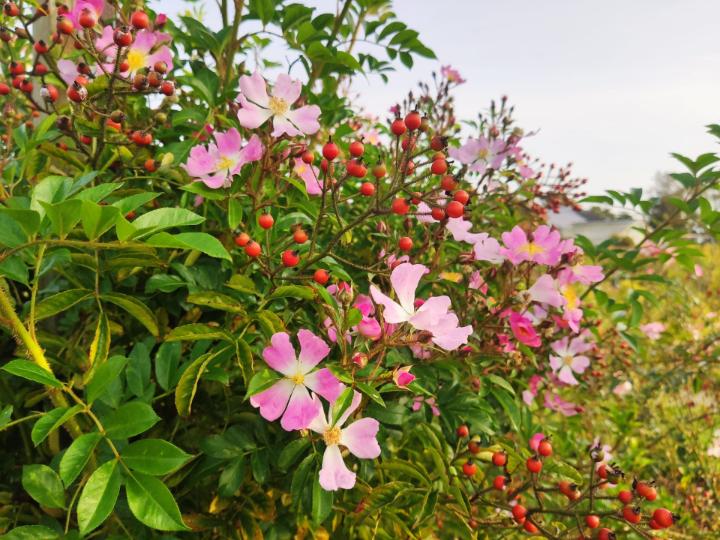
Or like Rosa multiflora adenochaeta shown below: A delightful combination of late-summer colors and fragrant elegance.
5. Which roses to deadhead (or not)?
Not all roses require deadheading. For roses that bloom only once per season (such as many botanical species and historical varieties), removing faded flowers offers little benefit.
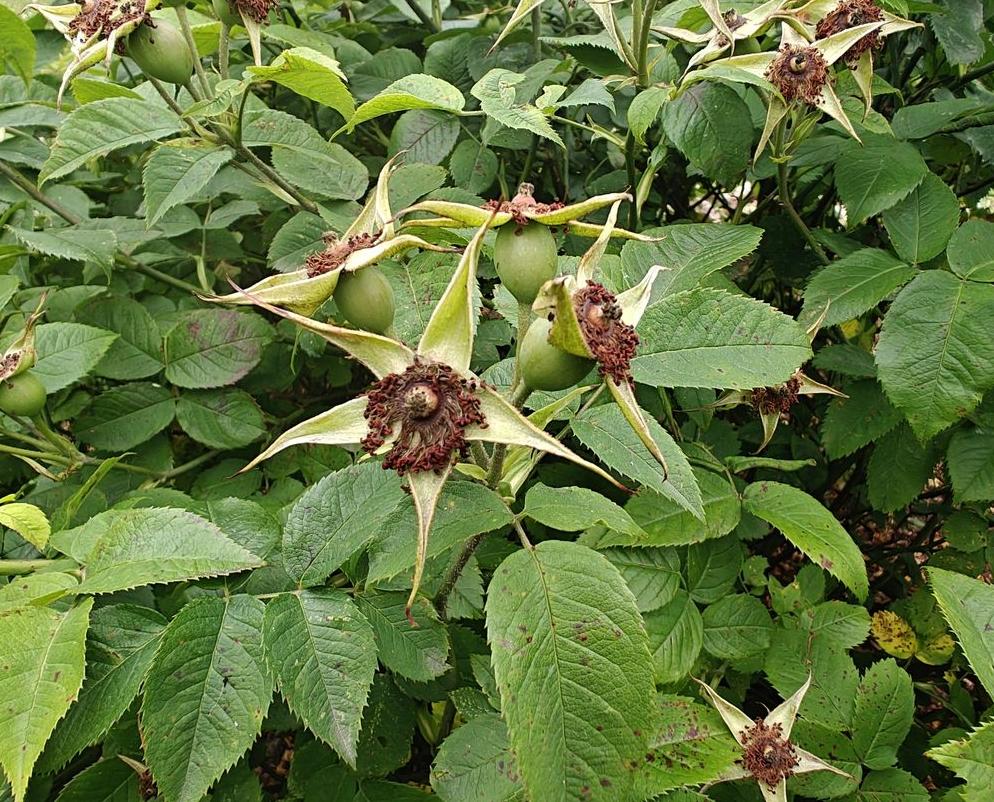
Think of roses like Rosa gallica Rosa gallica ‘Complicata’, an impressive classic with large, open flowers and deep orange-red hips. After blooming, the petals naturally fall, leaving delicate sepals resembling small stars—decorative in their own right. Similarly, summer-flowering shrubs like ‘Pleine de Grace’ can safely retain their spent blooms, especially if you want to enjoy their hips in autumn.
Unsure if your rose is repeat-flowering? Watch closely after the first bloom. If new buds appear within the next few weeks, pruning will certainly pay off. Or, if blooms show up again by September, you can confidently call it a repeat-flowering variety. It’s all about observing your plants carefully throughout the season.
6. Conclusion
Deadheading is one of those small gardening rituals that makes a world of difference. You help your rose reveal its beauty once again, keeping your garden or terrace fresh and lively.
Feel free to take your time. Removing spent flowers is not only beneficial for the plant — it also has a meditative quality. This small act of care will reward you with a new wave of fragrance and color.