
Buddleja davidii 'Dartmoor'
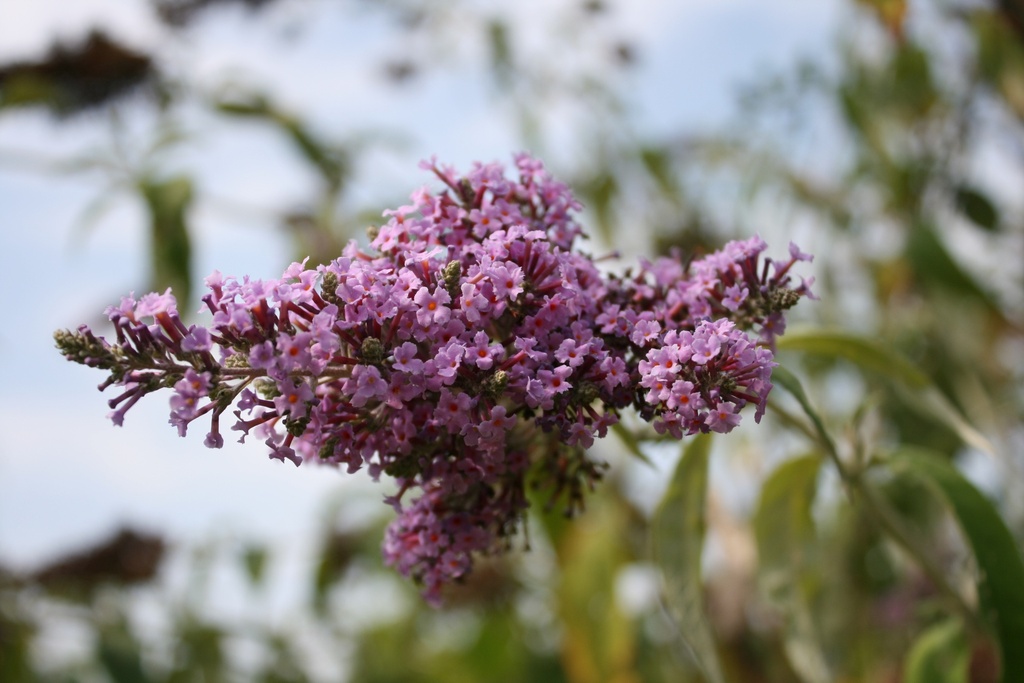
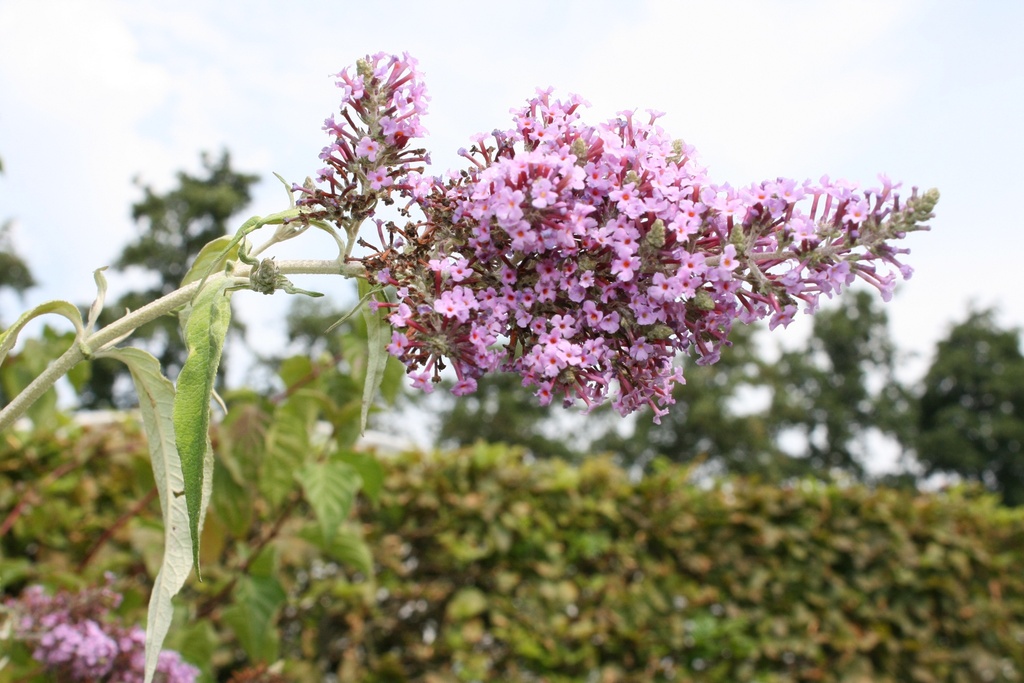
A very floriferous, vigorously growing butterfly bush with unique magenta to light purple flowers in spacious compound branched panicle clusters.
- Bijenplant
- Standplaats: Sun (>4h)
- Plantafstand: 250cm
- Vorstbestendigd: lager dan -15°C
Buddleja davidii 'Dartmoor' is a vigorous deciduous shrub with an open, somewhat unkempt growth habit, discovered in Dartmoor National Park in the UK. What sets this cultivar apart are its uniquely branched panicles — 20 to 30 cm long — in shades of magenta to soft purple. These highly fragrant flowers are packed with nectar, blooming from July through September, and are a major attraction for butterflies, bees, and other beneficial insects.
The grey-green, lance-shaped foliage is modest and very similar to the species type. The heavy flower heads cause the stems to arch gracefully, creating a natural, flowing silhouette. While ‘Dartmoor’ can reach up to 5 metres if left unpruned, for best results it is recommended to cut back by half in November to prevent wind damage, followed by a harder prune to around 80 cm in March–April.
The plant thrives in full sun and well-drained soil, tolerating drought once established. Its airy structure and ecological value make it an excellent choice for naturalistic plantings, pollinator-friendly gardens, or relaxed landscape borders.
Buddleja davidii 'Dartmoor' is a vigorous deciduous shrub with an open, somewhat unkempt growth habit, discovered in Dartmoor National Park in the UK. What sets this cultivar apart are its uniquely branched panicles — 20 to 30 cm long — in shades of magenta to soft purple. These highly fragrant flowers are packed with nectar, blooming from July through September, and are a major attraction for butterflies, bees, and other beneficial insects.
The grey-green, lance-shaped foliage is modest and very similar to the species type. The heavy flower heads cause the stems to arch gracefully, creating a natural, flowing silhouette. While ‘Dartmoor’ can reach up to 5 metres if left unpruned, for best results it is recommended to cut back by half in November to prevent wind damage, followed by a harder prune to around 80 cm in March–April.
The plant thrives in full sun and well-drained soil, tolerating drought once established. Its airy structure and ecological value make it an excellent choice for naturalistic plantings, pollinator-friendly gardens, or relaxed landscape borders.
- Bijenplant
- Standplaats: Sun (>4h)
- Plantafstand: 250cm
- Vorstbestendigd: lager dan -15°C
Standard Roses
Our Selections
Recently viewed:
Order on our website, by mail or phone
We are happy to help you